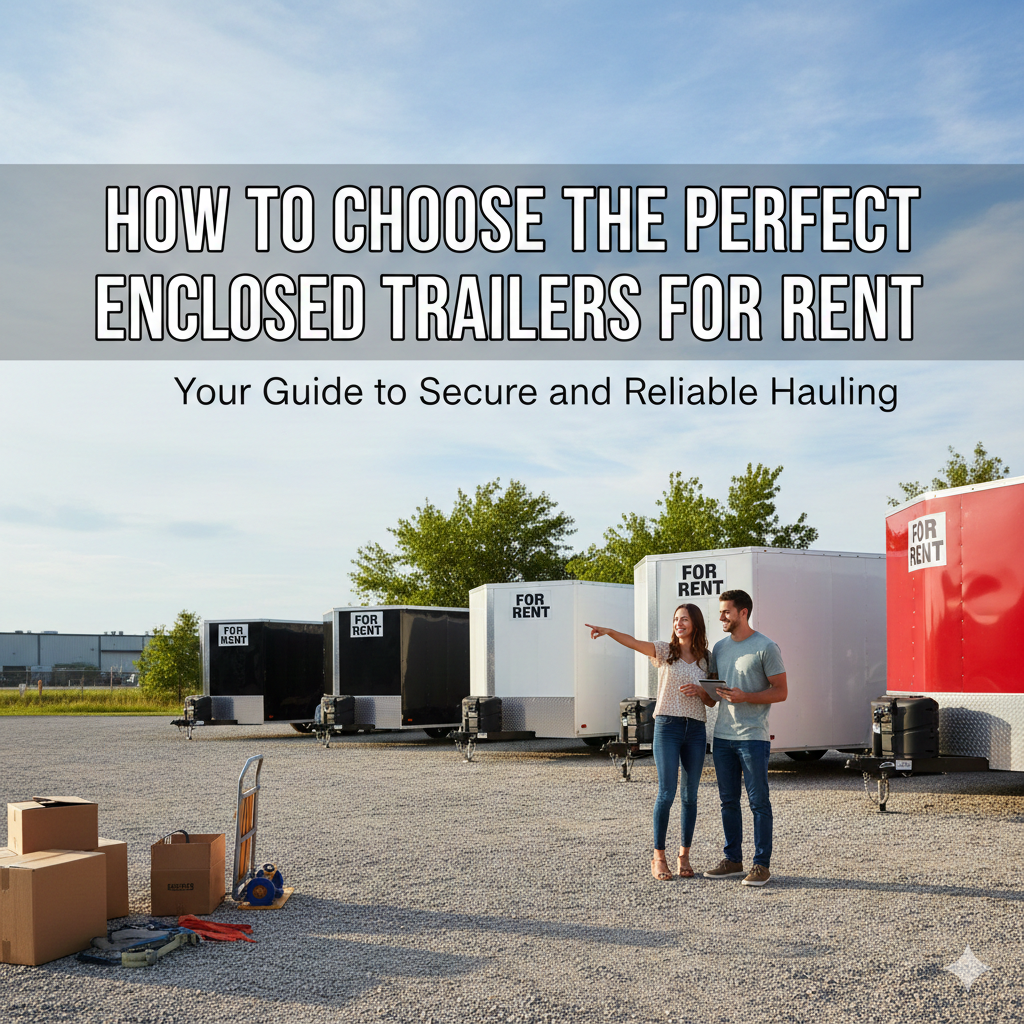
Choosing the right enclosed trailers for rent can save time, money, and stress. The perfect trailer protects your cargo, keeps it organized, and ensures safe travel. This guide will walk you through everything you need to know to make the best choice for your needs.
Enclosed trailers are versatile. They can transport vehicles, furniture, equipment, and event supplies. Unlike open trailers, they shield your cargo from weather, theft, and road debris. Renting an enclosed trailer is a smart, cost-effective solution for short-term or occasional hauling.
Step 1: Determine Your Cargo and Purpose
Before renting, ask yourself: what will you be transporting? Understanding your cargo type is essential.
- Tools and Equipment: Small cargo trailers are ideal for contractors, landscapers, or hobbyists transporting tools and machinery.
- Vehicles: Motorcycles, ATVs, or cars require auto trailers with ramps and reinforced flooring.
- Furniture or Appliances: Mid-sized cargo trailers offer secure space for moving household items.
- Event Supplies: Large enclosed trailers can transport tents, chairs, audio equipment, and decorations safely.
Knowing the purpose ensures you choose the right trailer type and avoid under- or overestimating the size you need.
Tip: Write down all items you plan to transport and their dimensions. This helps select the proper trailer length, width, and height.
Step 2: Choose the Right Size
Trailer size is critical for safe and efficient transport. Renting a trailer that is too small can damage your cargo. One that’s too large may be difficult to tow.
- Length: Small trailers (8–12 feet) are suitable for tools or a motorcycle. Medium trailers (12–16 feet) work for furniture or multiple small vehicles. Large trailers (16–24 feet) handle cars, large appliances, or event setups.
- Width: Standard widths range from 6–8 feet. Make sure your cargo fits comfortably. Overhangs can create unsafe towing conditions.
- Height: Some trailers have higher ceilings for tall furniture or equipment.
- Weight Capacity: Never exceed the trailer’s rated capacity. Check your towing vehicle’s towing limit before renting.
Pro Tip: Always allow extra space for padding, tie-down straps, or protective coverings to prevent damage.
Step 3: Consider Trailer Features
Modern enclosed trailers come with features designed for convenience and safety. Key elements to look for include
- Lockable Doors: Protect your cargo from theft, especially for overnight storage.
- Ramps: Simplify loading heavy items or vehicles.
- Tie-downs and Shelves: Keep cargo organized and prevent shifting.
- Lighting: Interior lights make loading and unloading easier in low-light conditions.
- Ventilation: Prevents moisture buildup, protecting sensitive cargo.
Some trailers offer optional upgrades such as extra insulation, solar-powered lights, or reinforced floors. These can make a big difference for long hauls or specialized cargo.
Example: A catering company may prefer a trailer with shelves and tie-downs, while a car owner needs ramps and reinforced floors.
Step 4: Check Towing Compatibility
Your towing vehicle must match the trailer’s requirements.
- Hitch Type and Rating: Ensure your vehicle’s hitch supports the trailer’s weight.
- Brakes and Wiring: Larger trailers often require brake controllers and electrical hookups.
- Vehicle Capacity: SUVs and trucks can tow heavier trailers, but smaller vehicles may not be suitable.
Failing to match a trailer with your towing vehicle increases risk and may lead to accidents.
Safety Tip: If unsure, consult the rental company for advice; they often recommend compatible vehicles.
Step 5: Inspect the Trailer Before Renting
A pre-rental inspection prevents road problems and hidden costs. Check for:
- Tire condition and pressure
- Functioning lights and brakes
- Signs of structural damage, rust, or leaks
- Clean and organized interior
Ask the rental company for a walk-through or inspection checklist. Document existing damage to avoid disputes upon return.
Step 6: Decide Between Renting and Buying
Many people debate whether to rent or buy. Consider:
- Occasional Use: Renting is cost-effective for one-time moves or short projects.
- Frequent Use: Buying may be worth it if you haul cargo regularly.
Rental Advantages:
- Flexible trailer size selection
- No storage or maintenance costs
- Access to upgraded features for special jobs
Buying involves upfront costs, long-term upkeep, and storage responsibilities.
Step 7: Plan Your Rental Carefully
Advance planning ensures availability and reduces stress.
- Reserve Early: Popular trailer sizes may sell out during peak moving seasons.
- Confirm Dates: Know your pick-up and return schedule.
- Understand Rental Terms: Check mileage limits, deposit requirements, and insurance coverage.
Some providers allow extended rentals or long-distance travel, which can be useful for multi-day projects.
Step 8: Understand Cost Factors
Rental pricing depends on several factors:
- Trailer size and type
- Rental duration
- Optional features (ramps, shelves, tie-downs)
- Location and seasonal demand
Compare providers to find competitive pricing. Look for discounts for longer rentals or multiple-day use.
Example: Renting a 12-foot trailer for three days may be cheaper than multiple 24-hour rentals of smaller trailers.
Step 9: Safety Tips for Towing
Safety is key when using enclosed trailers.
- Distribute cargo weight evenly to prevent swaying
- Secure all items with straps, bungee cords, or nets
- Avoid overloading beyond the rated weight capacity
- Check tire pressure, lights, and brakes before departure
- Drive slower and allow extra stopping distance for heavier loads
Following these tips ensures your cargo and vehicle stay safe during transit.
Conclusion
Choosing the perfect enclosed trailers for rent is a step-by-step process. First, identify your cargo and purpose. Then select the right size, features, and trailer type. Check towing compatibility, inspect the trailer, and plan your rental carefully. Understanding costs and following safety guidelines guarantees smooth transport.
By following this guide, you can confidently rent an enclosed trailer that fits your needs, protects your cargo, and simplifies hauling for any project. Renting the right trailer saves money, reduces hassle, and ensures peace of mind.
Ensure your cargo arrives safe and secure. Rent enclosed trailers for rent today. Pick the right size, type, and features for your move, event, or project. Book your trailer now!